O ver the last few years, green tea has garnered much attention for the possibility that it has many health benefits. Green tea has been used in Asian cultures for centuries to prevent and treat all sorts of diseases. This, coupled with the lower incidence of many serious diseases in Asian cultures, has led researchers to seriously study the health benefits of green tea.
One of the areas where green tea may have real health benefits is in preventing and treating heart disease. For example, Japanese men have one of the lowest incidences of heart disease in the world, and the Japanese are some of the most faithful drinkers of green tea; often consuming 8-10 cups per day. This information is even more compelling when you consider that nearly 75% of Japanese men smoke.
Green tea has been shown to be effective in lowering LDL cholesterol. In addition, it inhibits the formation of abnormal blood clots. Blood clots, or thrombosis, are the leading cause of heart attacks and strokes. You may find doctors beginning to prescribe green tea in addition to exercise, dietary changes and medications for lowering cholesterol.
In addition to its ability to lower cholesterol and inhibit blood clots, it also appears that the polyphenols in tea prevent the oxidation of low density lipoproteins (ldls). This is the substance that causes arterial plaque. This plaque sticks to your arteries, restricting blood flow to your heart (artherosclerosis). The plaque can also cause blood clots to form. Drinking green tea seems to prevent the buildup and reduce the risk of getting blood clots, too.
There have been a number of studies that have supported the idea that green tea is healthy for the heart. A study from the Center for Preventive Medicine at Kyushu University in Japan showed that among 302 men and 210 women, there was a significant difference in the level of atherosclerosis between the male participants who drank green tea and those who did not.
The difference was not significant in women. The difference was noticeable in participants who drank as little as 2-3 cups per day, but was even more noticeable in those who drank 4 or more cups per day. This study concluded that green tea may be effective at preventing atherosclerosis, at least in men.
In addition to its preventive properties, there is also evidence that green tea may help patients who already have heart disease. A study from Harvard Medical School showed that tea drinkers among heart attack patients might survive longer than those who drink something else.
In this study, participants who drank at least 14 cups of tea per week were 44 percent less likely to die than those who didn't drink tea; moderate tea drinkers (those who consumed fewer than 14 cups per week) were 28 percent less likely to die for up to four years after than those who didn't drink tea.
Even the Journal of the American Heart Association has come on board. In 2001, they reported that consumption of green tea is likely to be beneficial to patients with heart disease. And, the Journal of Nutrition reported in 2003 that green tea was known to protect against heart disease and lower cholesterol.
Of course, the research will continue, and we will learn more about the benefits of green tea for heart disease and other health issues. One thing seems for sure; green tea does have healthy benefits, primarily due to its powerful anti-oxidants.
Anti-oxidants are one of our bodies' best defense mechanisms because they fight free radicals that are created during the process of converting the food we eat into energy. Left unchecked, free radicals damage our cells and DNA. The cell and DNA damage caused by free radicals cause us to age more quickly, weaken our immune system and make us more susceptible to a host of serious diseases, including cancer.
But, anti-oxidants combat these free radicals, ridding our bodies of them.
Fruits and vegetables, as well as green tea are good anti-oxidant sources, and can help us fight free radicals regularly if we make them a part of our daily life.
It's important to ensure that if you're drinking tea for your health that it is green tea rather than traditional black tea. While black tea is a healthy beverage, it is not as healthy as green tea. This is because black tea goes through a fermentation process that changes the anti-oxidants from their original state. When this happens, some of the health benefits are lost.
So, drink up. Though there is more research to be done it does seem certain that drinking green tea is good for you. With just a few cups of this delicious beverage each day, you may be extending your life and making it healthier, too!
source : Marcus Stout
Read more...
Wednesday, June 24, 2009
Monday, June 15, 2009
TEA DRINKS - DRINK ANYWAY YOU LIKE IT!
F resh green tea leaves could simply be put in boiling water and the extract is consumed as such or with suitable additives!
This seems to be too much a primitive recipe! But, tea has very many ways of expressing its taste to tea lovers of the world!
Processed tea leaves or dusts when come into contact with hot water or milk readily discharge the chemical constituents that give color, taste and flavor to the liquid. The tea extract thus taken is consumed in different ways.
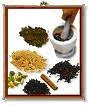 The raw liquor is taken with out any additive. The tea extract is sometimes taken with sugar alone. Some people wish to add sugar and milk in various propositions. Some have a liking for spiced tea. They add selected spices with tea extract and taste it in a special way.Some wish to take it ice cold also. There is a different form of tea made available to make it instantly!
Let us go to some interesting details about making of different kinds of tea drinks. We will enjoy their peculiar behavior in giving the color, taste, flavor and strength in different levels to make the tea differently to different kind of tea lovers. This is an art and a science leaving good scope for study to the people associated with tea research and tea industry as well.
Tea making at different places differs!
At home tea is made thus:
Dust tea in boiling water!
Take about 200 ml. of water in an aluminium sauce pan and bring it to boiling. Now add a tea spoonful of tea dust and allow it for boiling for about a minute. Stop boiling and close it with a lid. Decant or filter the golden liquor through a sieve. This tea decoction is mixed with equal quantity of whole hot milk and about 4 teaspoonful of sugar to taste. This will make 3 cups of hot tea!
Leaf tea in boiling water!
The same procedure is adopted for tea leaves also. Only thing needed is a little more of tea leaves and one minute extra time for boiling to make a mild flavored tea
with a special taste! Adding sugar and milk and their quantities are taster’s choice.
Tea leaves are bigger particles and they release tea liquor only when boiled for an extra minute!
Dust or leaf tea in boiling milk!
Tea drink is made by boiling the tea dusts or leaves in whole or diluted milk for about 1 or 2 minutes. The filtered milky decoction is added with required sugar. Here the tea or dust required may be a little less as the milk fat absorbs the taste giving materials quickly and fuller extent.
In all the above tea making process, you will find the taste and color varying in strength, as the size of the tea particles and also medium of extraction changes. This is a scientific truth to be observed with the future tea blending techniques!
At tea shops tea is made differently!
The tea gets extracted and filtered into a big vessel. About 1200 grams of sugar is added, mixed well and transferred into a 20 litre thermos flask for serving about 150 to 200 people.
Here, care is taken to select a tea dust which is medium sized and does not contain too much of fibres. Too small a dust and more of fibres will give too much of tasty materials in the drink. They will turn into a turbid and creamy tea making the consumer dislike it when served after sometime.
In hotels, tea is prepared in small quantities with tea leaves with wholesome milk and sufficient sugar. Sometimes, tea is extracted and served in separate tea pots with sugar and milk separately. The consumer will make his own choice of combination to mix tea with other ingredients.
There are different kinds of teas:
LEMON TEA: A light tea extract is mixed with sugar and a few drops
of lemon juice.
MASALA TEA: While boiling the tea a small quantity of powdered spices of cardamom, clove etc is added to get a special taste.
GINGER TEA: Crushed ginger is added to the boiling tea decoction and added to sugar and milk.
HERBAL TEA: There are different kinds of herbal powders with or even without real tea dusts. A pinch of it is added into the boiling water and the extract is consumed with or without sugar or milk. It is taken for a period of time for treatments like reducing blood sugar.
ICED TEA: A fancy kind of tea served with lime and mint with ice cubes in glass tumblers. This is a special tea for people who like luxury.
INSTANT TEA: A small quantity of tea dust is boiled and extracted. The extract taken in a non stick vessel is boiled and reduced into thick gravy, cooled down and dried and powered to make powered tea extract. This is used as an instant tea with hot milk and sugar.
The instant tea is made by spraying tea decoction on a hot non stick revolving drum. The instant tea powder is blended with spices for special taste.
DIP DIP TEAS:Tea dusts that release very quick liquor is packed in small quantities of about 1.5 grams in permeable membraneous paper bags with a thread attached with a tag.The tag is used for holding the tea bag. The paper bag with tea is dipped inside the sweetened milk in a cup. The tea is mixed by dipping the bag twice or thrice.
Read more...
This seems to be too much a primitive recipe! But, tea has very many ways of expressing its taste to tea lovers of the world!
Processed tea leaves or dusts when come into contact with hot water or milk readily discharge the chemical constituents that give color, taste and flavor to the liquid. The tea extract thus taken is consumed in different ways.
 The raw liquor is taken with out any additive. The tea extract is sometimes taken with sugar alone. Some people wish to add sugar and milk in various propositions. Some have a liking for spiced tea. They add selected spices with tea extract and taste it in a special way.Some wish to take it ice cold also. There is a different form of tea made available to make it instantly!
Let us go to some interesting details about making of different kinds of tea drinks. We will enjoy their peculiar behavior in giving the color, taste, flavor and strength in different levels to make the tea differently to different kind of tea lovers. This is an art and a science leaving good scope for study to the people associated with tea research and tea industry as well.
Tea making at different places differs!
At home tea is made thus:
Dust tea in boiling water!
Take about 200 ml. of water in an aluminium sauce pan and bring it to boiling. Now add a tea spoonful of tea dust and allow it for boiling for about a minute. Stop boiling and close it with a lid. Decant or filter the golden liquor through a sieve. This tea decoction is mixed with equal quantity of whole hot milk and about 4 teaspoonful of sugar to taste. This will make 3 cups of hot tea!
Leaf tea in boiling water!
The same procedure is adopted for tea leaves also. Only thing needed is a little more of tea leaves and one minute extra time for boiling to make a mild flavored tea
with a special taste! Adding sugar and milk and their quantities are taster’s choice.
Tea leaves are bigger particles and they release tea liquor only when boiled for an extra minute!
Dust or leaf tea in boiling milk!
Tea drink is made by boiling the tea dusts or leaves in whole or diluted milk for about 1 or 2 minutes. The filtered milky decoction is added with required sugar. Here the tea or dust required may be a little less as the milk fat absorbs the taste giving materials quickly and fuller extent.
In all the above tea making process, you will find the taste and color varying in strength, as the size of the tea particles and also medium of extraction changes. This is a scientific truth to be observed with the future tea blending techniques!
At tea shops tea is made differently!
- There will be a copper water boiler with a small lid to pour water. The centre of the boiler has a copper tube where charcoal is partially filled and allowed to burn to heat the water in the boiler around. There will be an opening with a tap at the side of the boiler for drawing steaming hot water.
- A conical shaped muslin tea bag is fixed to a small metallic ring and a handle. The tea dust is taken in the bag. The boiling water is added to the tea bag and the liquor is collected in an aluminium cup.
- A number of glass tumblers are arranged in line. Hot milk and sufficient sugar is added to the tumblers. The tea decoction is also added to the tumblers and mixed one by one.
- Sometime the tea decoction, milk and sugar are mixed in a bigger cup. This prepared tea is then transferred to tea glass tumblers or ceramic cups and saucers and served to the consumers. Here the tea is prepared as and when people place orders.
The tea gets extracted and filtered into a big vessel. About 1200 grams of sugar is added, mixed well and transferred into a 20 litre thermos flask for serving about 150 to 200 people.
Here, care is taken to select a tea dust which is medium sized and does not contain too much of fibres. Too small a dust and more of fibres will give too much of tasty materials in the drink. They will turn into a turbid and creamy tea making the consumer dislike it when served after sometime.
In hotels, tea is prepared in small quantities with tea leaves with wholesome milk and sufficient sugar. Sometimes, tea is extracted and served in separate tea pots with sugar and milk separately. The consumer will make his own choice of combination to mix tea with other ingredients.
There are different kinds of teas:
LEMON TEA: A light tea extract is mixed with sugar and a few drops
of lemon juice.
MASALA TEA: While boiling the tea a small quantity of powdered spices of cardamom, clove etc is added to get a special taste.
GINGER TEA: Crushed ginger is added to the boiling tea decoction and added to sugar and milk.
HERBAL TEA: There are different kinds of herbal powders with or even without real tea dusts. A pinch of it is added into the boiling water and the extract is consumed with or without sugar or milk. It is taken for a period of time for treatments like reducing blood sugar.
ICED TEA: A fancy kind of tea served with lime and mint with ice cubes in glass tumblers. This is a special tea for people who like luxury.
INSTANT TEA: A small quantity of tea dust is boiled and extracted. The extract taken in a non stick vessel is boiled and reduced into thick gravy, cooled down and dried and powered to make powered tea extract. This is used as an instant tea with hot milk and sugar.
The instant tea is made by spraying tea decoction on a hot non stick revolving drum. The instant tea powder is blended with spices for special taste.
DIP DIP TEAS:Tea dusts that release very quick liquor is packed in small quantities of about 1.5 grams in permeable membraneous paper bags with a thread attached with a tag.The tag is used for holding the tea bag. The paper bag with tea is dipped inside the sweetened milk in a cup. The tea is mixed by dipping the bag twice or thrice.
Read more...
Friday, June 12, 2009
Tea Grades-Kinds-Varieties: Learn All About Teas!
SILVERSHINE TEA FACTORIES:
L ook at the tea factories located on the hill tops; their metallic tops are shining in the sunlight; they leave smoke in the sky demonstrating that they are active in the production of raw teas.
When you admire at the birds eye view of the plantation, come down and drive in a jeep and see the estates at a closer look. The tea plants are not really short bushes, but tall growing trees kept pruned and grown to a short height of about 4 feet for all the operational convenience of man.
BONSAI CULTURE:
You are right. It is a large scale “bonsai culture” of hundreds and hundreds of tea trees grown to a short height, not in earthen pots, but in Mother Nature’s lap. The aim is not to exhibit the art of bonsai, but to exploit the nature to the advantage of man with the help of science.
The tea plucking is a beautiful operation. Just walk and see the plants opening their ‘two leaves and buds’ every where in the terminal shoots. They appear in all the pruned shoots, say in hundreds in a bush of tea, readily allowing the women harvester to pluck and put in tea leaf baskets. Baskets of tea leaves are emptied into small trucks and sent to the factory for processing.
You can see the tea leaves being processed inside the tea factory. To explain in a simple way, the leaves are withered, fermented, roasted, graded through sieves into different sizes and packed in separate bulks in chests and gunny bags in convenient sizes. There may be about seven or eight grades of tea from each factory.
ALL THE TEAS ARE DIFFERENT:
There is also difference in making of the teas also. The good old method of processing is adopted in some orthodox factories, while ultra modern method of CTC processing is done in most of the factories. The methods are different and so also the resultant teas, while the raw materials are the same”two leaves and buds”.
The teas are now made available in the form of bulk teas or in other words, they are graded and kept in loose form in bulk quantities ready to be shifted to godowns of auctioneers for selling to big traders.
HUNDREDS AND HUNDREDS OF TEA ESTATES-ALL ARE DIFFERENT!
Now, let us see the loose teas in different grades or sizes. Now, the teas are in the custody of auctioneers and tea brokers. You may ask for those samples of teas. Get a shock, here.
What a surprise? They give you samples of teas of different kinds and grades and also from hundreds and hundreds of plantations, estates or factories. To a new entrepreneur, really it is a shock and starting of a state of confusion!
You thought that tea is simply a single direct product; all will be alike; you can just make it as a tea drink; enjoy consuming it sip by sip. Only when you see the auction catalogues and samples, you will get astonished to see that there are hundreds and hundreds of varieties and kinds; again that all are not the same; they differ in their characters too. Alright, there is something to know and something to do! It is wonderful!
Now, you agree that there is a need to understand all kinds of teas in respect of their prime characters called, color, taste, flavor and strength.
Read more...
L ook at the tea factories located on the hill tops; their metallic tops are shining in the sunlight; they leave smoke in the sky demonstrating that they are active in the production of raw teas.
When you admire at the birds eye view of the plantation, come down and drive in a jeep and see the estates at a closer look. The tea plants are not really short bushes, but tall growing trees kept pruned and grown to a short height of about 4 feet for all the operational convenience of man.
BONSAI CULTURE:
You are right. It is a large scale “bonsai culture” of hundreds and hundreds of tea trees grown to a short height, not in earthen pots, but in Mother Nature’s lap. The aim is not to exhibit the art of bonsai, but to exploit the nature to the advantage of man with the help of science.
The tea plucking is a beautiful operation. Just walk and see the plants opening their ‘two leaves and buds’ every where in the terminal shoots. They appear in all the pruned shoots, say in hundreds in a bush of tea, readily allowing the women harvester to pluck and put in tea leaf baskets. Baskets of tea leaves are emptied into small trucks and sent to the factory for processing.
You can see the tea leaves being processed inside the tea factory. To explain in a simple way, the leaves are withered, fermented, roasted, graded through sieves into different sizes and packed in separate bulks in chests and gunny bags in convenient sizes. There may be about seven or eight grades of tea from each factory.
ALL THE TEAS ARE DIFFERENT:
There is also difference in making of the teas also. The good old method of processing is adopted in some orthodox factories, while ultra modern method of CTC processing is done in most of the factories. The methods are different and so also the resultant teas, while the raw materials are the same”two leaves and buds”.
The teas are now made available in the form of bulk teas or in other words, they are graded and kept in loose form in bulk quantities ready to be shifted to godowns of auctioneers for selling to big traders.
HUNDREDS AND HUNDREDS OF TEA ESTATES-ALL ARE DIFFERENT!
Now, let us see the loose teas in different grades or sizes. Now, the teas are in the custody of auctioneers and tea brokers. You may ask for those samples of teas. Get a shock, here.
What a surprise? They give you samples of teas of different kinds and grades and also from hundreds and hundreds of plantations, estates or factories. To a new entrepreneur, really it is a shock and starting of a state of confusion!
You thought that tea is simply a single direct product; all will be alike; you can just make it as a tea drink; enjoy consuming it sip by sip. Only when you see the auction catalogues and samples, you will get astonished to see that there are hundreds and hundreds of varieties and kinds; again that all are not the same; they differ in their characters too. Alright, there is something to know and something to do! It is wonderful!
Now, you agree that there is a need to understand all kinds of teas in respect of their prime characters called, color, taste, flavor and strength.
Read more...
Subscribe to:
Posts (Atom)

